
ACL Injury Prevention
As a knee surgeon who repairs and reconstructs ACL injuries every week, nothing makes me happier than helping a patient avoid surgery in the first place.
The good news — and it is genuinely good news — is that a large percentage of ACL injuries are preventable. They are not random bad luck. They are the result of specific, correctable movement patterns that we can train the body to avoid.
This page covers everything I know about ACL injury prevention: why injuries happen, who is most at risk, what the research shows, and exactly what you or your athlete can do about it starting today.

On this page I have many videos that do a deep dive into the ACL injury as well as surgical treatment. Through these videos I hope to educate my patients regarding their injury, surgery, and recovery.
Video Education
Dr. Merritt has developed an in-depth video series on ACL injury, surgical options, and recovery. These videos help patients understand the condition, the procedure, and what to expect.
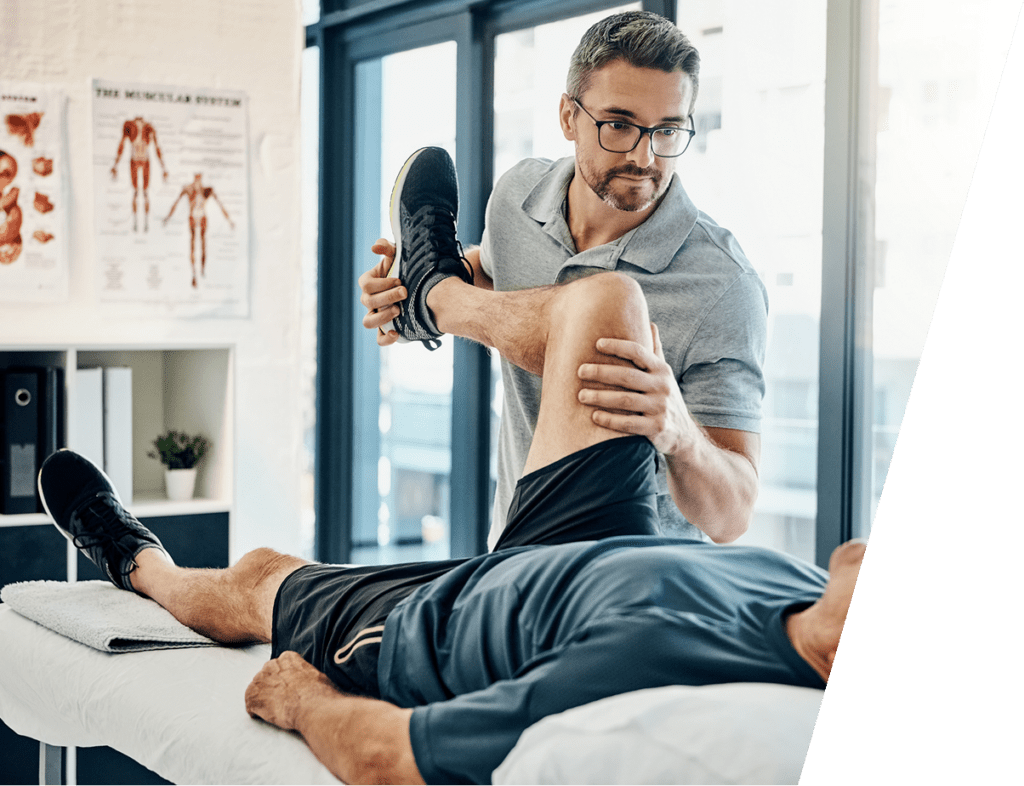
Understand the Injury – Understand the Prevention:
Understanding why ACL tears happen is the foundation for preventing them. There are two things to understand: the mechanics of the injury, and the underlying risk factors.
The Injury Mechanism: The Valgus Collapse
The most common non-contact ACL injury follows a predictable pattern. An athlete is landing from a jump, decelerating, or cutting — and the knee buckles inward in what is called dynamic knee valgus. In slow motion, this looks like a ‘knock-kneed’ collapse: the thigh rotates inward, the knee shifts inward, and the lower leg rotates outward. This combination of forces — combined with the knee being close to fully straight — loads the ACL beyond its failure point, and it tears.
This happens in milliseconds. There is no time for a conscious muscular correction. The body has to have already learned to move safely — which is exactly what ACL prevention training teaches it to do.
Why this matters: Alarming ACL Numbers
|
70% Non-Contact |
Approximately 70% of all ACL tears happen without any contact from another player — they are caused by the athlete's own body mechanics. This means most ACL injuries are preventable. |
|
~55% Return to Sport |
Only about 55% of athletes successfully return to competitive sports following ACL reconstruction. Surgery is not a guaranteed ticket back. |
|
30% Re-Injury Rate |
Up to 30% of athletes who do return to sport will sustain a second ACL injury — to the same knee or the other one. |
|
50–88% Reducible Risk |
Structured neuromuscular prevention programs have been shown to reduce ACL injury rates by 50–88% in large, well-designed studies. |
|
9–12 Mo. Recovery Time |
ACL reconstruction requires a minimum of 9 months of biological healing — and often 12–18 months for full return to sport confidence. |
The Underlying Risk Factors
The valgus collapse does not happen randomly. It is the end result of specific, correctable deficits:
1. Weak Hips and Glutes
The hip abductors — primarily the gluteus medius — are responsible for controlling the position of the femur (thigh bone). When these muscles are weak, the thigh drifts inward during landing and cutting, driving the knee into valgus. Strengthening the hips is one of the most protective things an athlete can do.
2. Weak Core
The core acts as the foundation for everything below it. A weak or poorly-activated core means the pelvis cannot be adequately stabilized during dynamic movements, which cascades down the kinetic chain to the knee. Core stability is not just about aesthetics — it is a critical component of knee protection.
3. Quadriceps Dominance
Many athletes — particularly females — preferentially use their quadriceps to stabilize the knee, with insufficient activation of the hamstrings and glutes. This is a problem because the quadriceps create a forward shear force on the tibia that directly stresses the ACL. The hamstrings do the opposite — they pull the tibia back, acting as a dynamic partner to the ACL. A low hamstring-to-quadriceps strength ratio is a well-documented risk factor for ACL injury and re-injury.
4. Poor Landing Mechanics
Athletes who land flat-footed or stiff-legged, with the knee near full extension, transmit enormous forces up the kinetic chain. Athletes who land on the forefoot with the knee and hip flexed (‘soft landings’) absorb those forces through the muscles rather than the ligaments.
5. Sport Specialization at a Young Age
Year-round single-sport specialization — particularly before the age of 14 — is associated with increased ACL injury risk. The repetitive stress of one sport without the cross-training benefits of varied movement patterns leads to imbalances and overuse patterns that increase vulnerability. I recommend multi-sport participation for young athletes through early adolescence.
Who is at highest risk?
Female Athletes
Female athletes are 2–8 times more likely to tear their ACL than male athletes participating in the same sports. This is one of the most well-established findings in sports medicine, and it is driven by multiple factors: anatomical differences in the width of the pelvis and the angle of the femur, hormonal influences on ligament laxity, neuromuscular differences in how females activate their muscles during landing, and a higher prevalence of quadriceps dominance. This is not a reason to avoid sports — it is a reason to train smarter. Prevention programs are particularly effective in female athletes.
Young Athletes and Adolescents
The combination of rapid growth, underdeveloped neuromuscular control, sport specialization pressure, and high training volumes makes adolescent athletes a high-risk group. Early introduction of neuromuscular training — ideally before the teenage years — can establish safe movement patterns during the developmental window when they are most effectively learned.
Weekend Warriors
Adults who are sedentary during the week and highly active on weekends — skiing, soccer, basketball, pickleball — face a specific and underappreciated risk. The muscles that protect the knee are not conditioned for the demands being placed on them in the moment of injury. A consistent pre-activity warm-up routine dramatically reduces this risk.
Athletes with a Prior ACL Injury
As noted above, the risk of tearing the contralateral (opposite) ACL is approximately equal to or greater than the risk of re-tearing the reconstructed knee. Prevention training is not just for athletes who have never been injured — it is critically important throughout ACL recovery and as a lifelong practice for any athlete with a history of ACL injury.
The Detailed Science
ACL prevention programs work through a mechanism called neuromuscular training. This is not just strength training — it is the systematic re-education of how the nervous system recruits and coordinates muscle groups during athletic movement.
The Research Is Clear
This is not theoretical. Multiple large-scale studies and meta-analyses have consistently shown:
- Structured neuromuscular warm-up programs reduce ACL injury rates by 50–88% in female athletes
- Programs as short as 10–20 minutes performed before training sessions produce significant protective effects
- Benefits are seen across sports including soccer, basketball, volleyball, handball, and skiing
- The programs also reduce overall lower extremity injury rates — not just ACL injuries
- Compliance is the key variable: teams and athletes who do the program consistently see the results; those who do it sporadically do not
The FIFA 11+ is the most extensively studied and validated ACL injury prevention program in the world. It was developed by an international panel of experts in association with FIFA and has been tested in large, randomized controlled trials involving thousands of athletes across multiple countries.
What the Research Shows on FIFA 11+
- 50–88% reduction in ACL injury rates in female soccer players
- 35–50% reduction in all acute knee injuries
- Significant reductions in ankle sprains and hamstring injuries as well
- Effects seen in as little as one season of consistent use
- Validated in youth, collegiate, and adult soccer populations
The FIFA 11+ is designed to replace a standard warm-up before every training session and game. It consists of three parts performed in sequence, totaling approximately 20 minutes:
Part | Component | Duration | What It Does |
|---|---|---|---|
Part 1 | Running Exercises | 8 minutes | Jogging straight, hip-in/out, circling a partner, shoulder contact jumps, quick forward/backward sprints — warms the body and introduces movement patterns |
Part 2 | Strength, Plyometrics & Balance | 10 minutes | Progressed in 3 levels: Core (plank variations), Hamstrings (Nordic curls), Balance (single-leg). Each component has beginner, intermediate, and advanced versions |
Part 3 | Running Exercises | 2 minutes | Cutting, bounding, and running drills that apply the neuromuscular patterns trained in Part 2 in dynamic, sport-specific contexts |
I have developed two evidence-based prevention protocols tailored to different athlete profiles. Both are built on the same core principles as FIFA 11+ — neuromuscular training, hip and core strengthening, and plyometric landing mechanics — adapted for different contexts and time availability.
Protocol 1: Full 30-Minute Program — For Serious Athletes
This is the comprehensive program for competitive and serious recreational athletes. It is designed to be performed 2–3 times per week as a pre-practice or pre-game warm-up. It replaces traditional static stretching and generic warm-ups with a targeted, evidence-based routine.
Protocol 1: Full 30 Minute Program for Serious Athletes
Protocol 2: Weekend Warrior 10-Minute Routine — No Equipment Needed
For recreational athletes who do not have 30 minutes or access to equipment, this 10-minute routine covers the essential bases. It is designed for skiers, hikers, pickleball players, weekend soccer and basketball players — anyone who is active but does not train with a team. Do it before every game, ski run, or intense activity. No excuses — no equipment required.
Protocol 2: Weekend Warrior 10 Minute Routine - No Equipment Needed
The One Non-Negotiable: Consistency
All of the research on ACL prevention programs shares one finding above all others: consistency is the variable that determines success. Teams and athletes who do the program faithfully every session see dramatic reductions in injury rates. Those who do it sporadically see minimal benefit.
It takes approximately 6-8 weeks of consistent training before neuromuscular adaptations become ingrained. Think of it like learning a new motor skill — the body has to repeat the movement patterns enough times for them to become automatic. After that threshold, the protective effect is present even when the athlete is fatigued, distracted, and fully focused on the game rather than their mechanics.
Injury and Surgery Resources
Dr. Merritt provides detailed instructions and protocols to guide patients through every stage of recovery.
Post-Op Instructions
Studies Cited
- Boden BP, Dean GS, Feagin JA Jr, Garrett WE Jr. Mechanisms of anterior cruciate ligament injury. Orthopedics. 2000;23(6):573-578. PubMed
- Ardern CL, Taylor NF, Feller JA, Webster KE. Fifty-five per cent return to competitive sport following anterior cruciate ligament reconstruction surgery: an updated systematic review and meta-analysis. Br J Sports Med. 2014;48(21):1543-1552. PubMed
- Paterno MV, Rauh MJ, Schmitt LC, Ford KR, Hewett TE. Incidence of Second ACL Injuries 2 Years After Primary ACL Reconstruction and Return to Sport. Am J Sports Med. 2014;42(7):1567-1573. PubMed
- Mandelbaum BR, Silvers HJ, Watanabe DS, et al. Effectiveness of a neuromuscular and proprioceptive training program in preventing anterior cruciate ligament injuries in female athletes: 2-year follow-up. Am J Sports Med. 2005;33(7):1003-1010. PubMed
- Arendt E, Dick R. Knee injury patterns among men and women in collegiate basketball and soccer. NCAA data and review of literature. Am J Sports Med. 1995;23(6):694-701. PubMed
- Hewett TE, Ford KR, Myer GD. Anterior cruciate ligament injuries in female athletes: Part 2, a meta-analysis of neuromuscular interventions aimed at injury prevention. Am J Sports Med. 2006;34(3):490-498. PubMed
- Thorborg K, Krommes KK, Esteve E, et al. Effect of specific exercise-based football injury prevention programmes on the overall injury rate in football: a systematic review and meta-analysis of the FIFA 11 and 11+ programmes. Br J Sports Med. 2017;51(7):562-571. PubMed
- Silvers-Granelli HJ, Bizzini M, Arundale A, Mandelbaum BR, Snyder-Mackler L. Does the FIFA 11+ Injury Prevention Program Reduce the Incidence of ACL Injury in Male Soccer Players? Clin Orthop Relat Res. 2017;475(10):2447-2455. PubMed
- Sugimoto D, Myer GD, Bush HM, et al. Compliance with neuromuscular training and anterior cruciate ligament injury risk reduction in female athletes: a meta-analysis. J Athl Train. 2012;47(6):714-723. PubMed
Common ACL Injury Prevention Questions
General Information
A: Both. Female athletes do have a significantly higher ACL injury rate than males in the same sports — 2–8 times higher depending on the study and sport. The reasons include anatomical, hormonal, and neuromuscular differences. So the urgency of prevention is higher in female athletes, and most of the large-scale studies have focused on them.
But male athletes tear their ACLs too, and prevention programs work for them as well. Studies in male soccer and football players show meaningful reductions in ACL and overall lower extremity injury rates with neuromuscular warm-up programs. The injury mechanics are the same — valgus collapse, poor landing mechanics, quadriceps dominance — and the training response is the same. If you have a son who plays cutting and pivoting sports, he should be doing this too.
A: It can be, yes. Single-sport specialization before age 14 is associated with higher ACL injury rates, higher overuse injury rates, and paradoxically, lower long-term athletic achievement. The body benefits enormously from the cross-training effect of different sports — varied movement patterns, different muscle recruitment demands, and a broader neuromuscular base.
The sports medicine and orthopedic community has become increasingly vocal about this over the last decade. Multi-sport participation through early adolescence builds better athletes and healthier knees. The data is not on the side of early specialization.
A: Yes — and this is critically important. One of the more sobering findings in ACL research is that athletes with a history of ACL reconstruction are at high risk for tearing the contralateral (opposite) knee, at rates similar to or higher than the re-tear risk on the reconstructed side. The same neuromuscular deficits and movement patterns that led to the first injury are often present in the opposite leg.
ACL prevention training is a cornerstone of the recovery program I use with all my reconstruction patients. It is not just about the injured leg. In the later phases of rehab (6–9 months), we specifically train neuromuscular patterns for both legs, with targeted work on the uninjured side. If you have had an ACL injury and are back to sport, please make prevention training a permanent part of your routine. This is not optional.
A: This comes up constantly in clinic, and I want to be direct: standard prophylactic knee braces do not prevent ACL injuries. The ACL tears due to rotational forces that a brace simply cannot control. A rigid brace stabilizes side-to-side motion reasonably well but cannot stop the internal tibial rotation and valgus combination that tears the ACL.
There is a meaningful distinction here between braces used after ACL reconstruction — which protect the healing graft and help with quad activation early in recovery — and braces worn by uninjured athletes hoping to prevent a tear. The evidence for the latter preventing ACL injury is not there.
The most effective ‘brace’ for the ACL is strong, well-trained hip and hamstring muscles. Train those instead.
A: For meaningful neuromuscular adaptation, a minimum of 2–3 times per week. The ideal implementation is before every practice and every game. One of the key findings from compliance studies is that athletes who do the program inconsistently see much smaller benefits than those who do it faithfully.
If you are working with the full 30-minute protocol and 2–3 sessions per week feels like too much time, start with 2 and build from there. Something is substantially better than nothing, and consistency over time is what produces the protective adaptation.
A: Yes, and arguably more than a full-time athlete does. Here is why: a competitive athlete who trains every day keeps the neuromuscular system primed and the supporting muscles conditioned. A recreational athlete who sits at a desk all week and then plays two hours of competitive pickleball or a full ski day on Saturday is asking their body to perform at a high level from a cold, deconditioned state. That mismatch is a significant risk factor.
The Weekend Warrior 10-Minute Routine I developed is designed specifically for this situation. Ten minutes before you play. No equipment. It takes the same amount of time as finding your car keys after the game. Make it a habit.
A: As early as possible, ideally by age 10–12. This is not because young children are at extremely high injury risk, but because the neuromuscular patterns we are trying to train are best learned during developmental windows. Children who learn proper landing and cutting mechanics early develop those as their default movement patterns. Children who learn them later have to unlearn years of ingrained habits first.
The program at ages 10–12 looks different than it does at 16 — simpler exercises, less loading, more focus on body awareness — but the foundational concepts are the same. Talk to your club coach about implementing a team warm-up program. If they are not doing one, show them this page.
A: They absolutely work — and the evidence is about as strong as it gets in sports medicine. The FIFA 11+ alone has been studied in randomized controlled trials involving tens of thousands of athletes across multiple countries. The consistent finding across dozens of studies is a 50–88% reduction in ACL injury rates when programs are done correctly and consistently.
I see the consequences of ACL tears every week in my practice. I would not be putting this content together if I did not genuinely believe it makes a difference. The bigger obstacle is not the science — it is getting athletes, parents, and coaches to actually do it.
Patient Stories
Procedure | Meniscus Surgery
– Amanda Arlt
Procedure | Meniscus Surgery
– Joel Townsend
Procedure | ACL Reconstruction
– C. H.
Procedure | ACL Reconstruction
– Anthony G.
Procedure | Patella Dislocation
– Jenna M.
Procedure | Patella Dislocation
– Esther O.
Procedure | Knee Arthritis
– Kim
Procedure | Knee Arthritis
– Maria M.
Procedure | Hip Arthritis
– Irma D.
Procedure | Hip Arthritis
– Trixie N.
Procedure | Fracture
– Jill L.
Procedure | Fracture
– Sheri T.
Patient Stories
– Solveig Waterfall
– C. H.
– Eric Faull
– Dan Winter
– Chase Fjetland
– Ian Mason
– Josh Padilla
– Erin Johnson
– D Nielsen
– Jake Trost
– Brett M
– Sharameh Leisure
– Jim McConville
– E. Nicole Cunningham
– George Baumann
– Mark Pease
– Ryan Turner
– Randi Baker
– Marlys Leonard
– Laura Jurgensen
See what other patients say about their experience.
You deserve to move freely again. We will help you take that step.
Call to book an appointment
(425) 291-1496